Reading and Writing Support
Reading aloud is often the part of school a pupil dreads most. We work at the pace that keeps them willing, using books they choose and short writing tasks with a clear point to them.
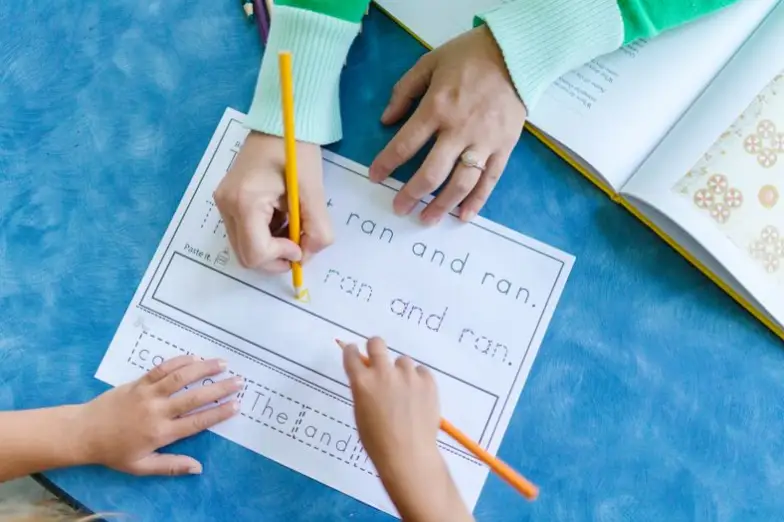
What reading and writing support is for
Reading aloud is often the part of school a pupil dreads most. The pause before an unfamiliar word, the guess, the quiet correction from someone at the next desk. Our reading and writing lessons exist to take that dread out of the school day, one book at a time.
We teach the mechanics and the meaning together. A pupil who can sound out words but cannot tell you what happened in chapter two gets comprehension work. A pupil who reads fluently but writes three-word sentences gets sentence-level writing. Most pupils need some of both, and the balance comes from the initial assessment rather than from a scheme pulled off a shelf.
Lessons are one-to-one, online or at home, for pupils aged 7 to 18. The bulk of our reading and writing work sits with pupils aged 7 to 13, where the foundations are laid and where a term of steady practice tends to change how a pupil walks into English on a Monday morning.
Who it suits, and who it does not
This support fits pupils who avoid reading aloud in class, guess at words from the first letter, lose the thread of a paragraph halfway down the page, or spell the same word three ways in one piece of homework. It fits the Year 5 pupil whose written work is far shorter than their spoken ideas, and the Year 8 pupil who reads quickly but cannot answer a question that begins with the word why.
It also fits the family who simply wants a second adult in the room, once a week, who is not marking anything and is not in a hurry.
It is not the right fit for a pupil sitting an English exam within a fortnight. That work belongs with our GCSE and A-level exam preparation, where the focus is papers, timings and mark schemes. Nor are we the right first call where a pupil may need a clinical assessment. We are qualified teachers, not speech and language therapists or educational psychologists, and if we think a pupil needs that kind of input we will say so and point you back to the school's SENCo.
How it works, step by step
1. A conversation first
You ring or email and tell us what you are seeing at home. Report cards, a reading diary, the comment a teacher made at parents' evening: all of it helps. We ask what the pupil says about English, because that answer usually tells us more than a reading age score.
2. The initial assessment
Every pupil starts with an assessment before any teaching begins. It covers reading aloud from a passage matched to their age, a short comprehension conversation, a spelling check and a piece of free writing of a few sentences. We watch how the pupil reacts when they get something wrong, which matters as much as the error itself.
3. A personal learning plan, shared before lessons begin
You see the plan before the first lesson. It sets out what we are working on, in what order, and what progress will look like from your side of the table. Our lead tutor reads every plan and keeps an eye on how it is being followed, so the approach does not drift between tutors or between terms.
4. Weekly one-to-one lessons
Lessons run at the same time each week where possible, because predictability helps a pupil who is already unsure of themselves. Tutors are qualified and DBS-checked. Sessions happen at home or online, whichever suits the household, and the reading book usually comes from the pupil's own shelf.
5. Progress reports for parents
You receive written progress reports for parents at agreed points in the plan, not a vague note that says good session. They record what was covered, what has shifted and what we are working on next, in plain language you can take to a parents' evening.
6. A review, then the next step
At the end of a plan we re-assess the same way we did at the start and decide together whether to continue, change the focus or stop. Stopping is a legitimate outcome. Some pupils need a term; others need a year.
What we ask you to have ready
Nothing formal. A quiet table and a regular slot are the two practical things that make the biggest difference. Beyond that, it helps to gather:
- The most recent school report, and any reading diary or home-school book.
- Two or three pieces of recent written work, including one the pupil found hard.
- The reading book or reading scheme the school uses, if there is one.
- For online lessons, headphones, a lamp and the book in hand rather than on a screen.
If the school has offered additional support or an individual plan, bring that too. We are happy to work alongside what is already happening in class rather than in a separate world, and a short note from the class teacher about current targets is often the most useful document in the folder.
Inside a typical lesson
A session usually opens with rereading. The pupil reads the same short passage they read last week, and the week before, until the words come faster and the voice settles. Then we move to something new: a page from a book they picked, a paragraph we read in turns, a question or two about what just happened and why a character behaved that way.
Writing comes in short bursts. A single well-built sentence beats a page of loose ones. We might write a review of a book for a younger sibling, a letter to a grandparent about a school trip, or three sentences explaining how a bicycle brake works. The task has a reader and a reason, which is the point. Handwriting and spelling get attention where they slow a pupil down, not as an end in themselves.
Our founder trained as a SENCo before setting up Brightmark Home Tutors, and that background shapes the pace here. Small steps, repeated, praised specifically. A pupil who has spent years being the slowest reader in the room needs to finish a lesson feeling competent, and that is the standard we hold ourselves to on a wet Tuesday in November as much as in the first week of term.
What shapes the timing and the fee
How long a plan runs depends on the starting point, the pupil's age, and how much practice happens between sessions. A pupil in Year 4 working on fluency may see the plan change shape within a term. A Year 9 pupil with gaps in comprehension and extended writing usually needs longer, and we will say so at the start rather than halfway through.
Frequency matters too. One lesson a week with reading at home moves faster than one lesson a week on its own. Online lessons remove travel from the evening, which is why some families book a later slot than they could manage at home. Fees are quoted on request, once we know the age, the frequency and whether lessons are online or at home.
We will also tell you if we think the answer is not more tutoring. Sometimes it is a reading scheme change at school, or a hearing check, or simply time.
Questions parents ask
How quickly will we see a change?
Reading confidence usually shows first at home, in whether a pupil picks up a book without being asked. Written progress reports will tell you what we are seeing. We do not promise a particular result by a particular date, because pupils arrive with different histories and different amounts of practice between lessons.
Do we need to buy books or materials?
No. We work with the books in your house, the school's reading scheme and passages we bring ourselves. A library card helps.
Can lessons happen online for a younger pupil?
Yes, and many do. For pupils aged 7 to 9 we usually suggest shorter, more frequent sessions online, with a parent nearby for the first few. What matters is that the book is physical and the camera is not the only thing in the room.
Will you speak to the school?
With your permission, yes. A short exchange with the class teacher about current targets keeps the tutoring pointed at what will actually help in class. We do not contact a school without your say-so.
When can we start, and when are you open?
Call +44 141 3770911 or email [email protected]. Opening hours are confirmed when you book, and we will tell you honestly what the next available slot looks like before you commit to anything.
From first steps to exam-ready
-
Sounds and blending
Phonics patterns and blending, so unfamiliar words stop being a wall.
-
Fluency
Reading aloud with expression and pace, using short texts read more than once.
-
Comprehension
Answering in full sentences, then planning a paragraph before writing it.
Lesson details
- ✓
Reading aloud
Time in every lesson to read to someone patient, with no audience.
- ✓
Writing frames
Simple scaffolds for planning, so a blank page stops being the enemy.
- ✓
Books that fit
We match texts to interest and reading level, and you get the titles in the report.