A-Level Exam Preparation
By year 13 the subject knowledge is usually there. What separates grades is precision: the argument, the units, the timing, and answering the question actually asked.
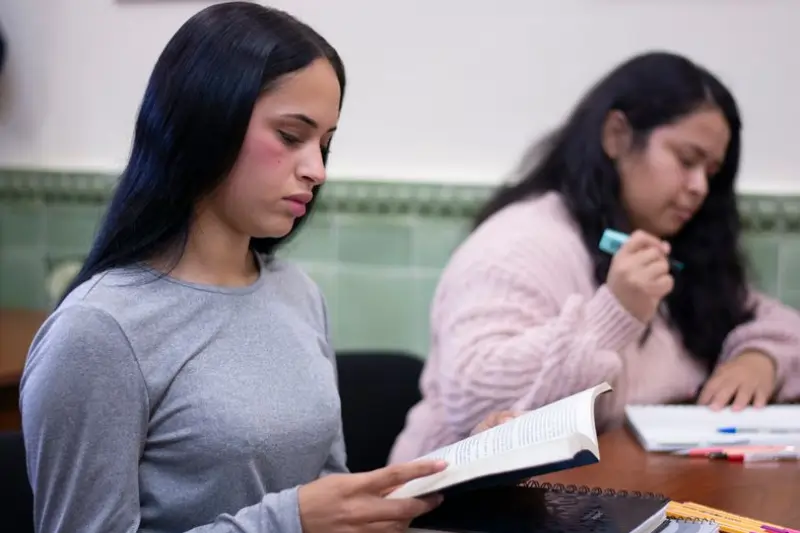
What A-level exam preparation looks like here
By the time a student reaches Year 13, most of the subject content is usually in place. What separates grades is precision: the argument, the units, the timing, and answering the question actually asked. Our A-level exam preparation is one-to-one tuition for students in Years 12 and 13, at home or online, with a subject tutor who knows the exam board's style and mark scheme.
We are Brightmark Home Tutors. We provide one-to-one lessons at home or online for pupils aged 7 to 18, and A-level preparation is the oldest part of that range. We work with families around Glasgow, from the West End out towards the suburbs, and online with families further afield. Every tutor is DBS-checked and qualified. Parents receive progress reports, so you are not guessing how things are going between mock exams.
We started as a small service set up by a former SENCo-trained teacher, and we still keep the same habit: find out where the gap is before booking a block of lessons. Lessons are not a repeat of the school timetable. We look at what the student can already do, find the specific places where marks are lost, and work on those until they become routine. That is the work.
Who it suits, and who it does not
A-level preparation tends to work well for students who:
- are in Year 12 or Year 13 and have exams or mock exams coming up;
- are putting in the hours but not seeing that effort in their marks;
- need to tighten exam technique in one subject, whether that is maths or English literature;
- want a steady weekly structure rather than a last-minute panic.
It is not the right fit for every family. We are not a crammer, and we do not run group revision sessions. If a student will not do any practice between lessons, progress will be slow. If the main problem is choosing a university course or a UCAS personal statement, that is a different kind of support and we will say so.
How it works, step by step
1. A conversation and an assessment
We ask for the exam board, the specification and any recent mock paper or school report. Then the tutor sets an assessment, usually a short past paper or a set of questions from the relevant papers. This is not a test to worry about. It shows us how the student reads a question, structures an answer and manages time.
2. A personal learning plan before lessons begin
Before the first lesson, we write a personal learning plan and share it with you. It names the topics to cover, the exam skills to practise, and the order we think will help most. Our lead tutor reviews the plan. You can ask questions or change the priorities before any teaching starts.
3. Weekly one-to-one lessons
Lessons usually run for an hour, once a week, though some students need two sessions a week close to exams. The tutor teaches the gap, not the whole specification again. A lesson might start with a quick retrieval quiz, move to a worked example, then finish with the student doing a question alone while the tutor listens and corrects.
4. Exam practice under real conditions
We build in timed questions and full papers as the exam gets closer. The student marks them with the tutor using the official mark scheme. This is where many marks are won: reading the command word, showing method, using the correct units, and not over-running on a low-mark question.
5. Progress reports and review points
We provide progress reports for parents at agreed points. They cover what has been taught, what is now secure, and what still needs work. We also review the plan every few weeks. If something is not working, we change it. We do not keep a student on a plan that has stopped being useful.
What the student brings, and what we prepare
The student does not need to arrive with a polished folder. Bring the exam board and specification, recent mock papers or school assessments, class notes, the set texts or textbooks, a calculator, and a short list of topics that feel shaky. If there is a mark scheme, bring that too. It helps the tutor see how the school is marking.
We prepare the assessment, the personal learning plan, past paper packs, mark schemes, examiner reports and question banks where available. We also prepare the progress reports and keep a record of what has been covered. For online lessons, the student needs a quiet space and a charged device, plus a way to share written work, either by camera or by uploading a photo.
What affects timing, frequency and the fee
There is no fixed package that suits every student. The fee is quoted on request, and it depends on the subject, the exam board, the number of papers, the time left before the exams, and how often you want lessons. Online lessons avoid travel time. Home lessons may depend on where you live and tutor availability. We confirm lesson times and availability when you book.
Start earlier if the student is missing foundations. Start with a tighter focus if the knowledge is there and the issue is exam technique. A student who begins in September can work through the specification at a steady pace. A student who begins in March may need two sessions a week and a narrower plan built around the paper structure. Neither route is better. They are different problems.
Questions parents and students ask
Do you cover my exam board?
We ask for the board and specification before the first lesson. Tutors prepare from the correct papers and mark schemes, so the lessons match the exam the student will actually sit. If we do not have a tutor who knows that specification well, we will say so rather than take the booking.
Can lessons be online?
Yes. One-to-one lessons are available at home or online. Some families choose online because it fits around a busy week; others prefer home lessons because the student concentrates better in their own space. Both use the same planning and progress reports.
How early should we start?
It depends on the gap. A student who is close to the grade they need may only need a short block of exam technique sessions. A student who has missed a lot of Year 12 may need longer. We will tell you what we think after the assessment, even if that means saying you do not need as many lessons as you expected.
How do parents know it is working?
Progress reports give you a clear picture. We report on what has been covered, what is secure, and what still needs work. We do not invent a predicted grade. We can tell you how the student is performing on past paper questions and what that suggests, but the exam result is not ours to promise.
Can you help with coursework or the NEA?
We can support the planning, research and understanding behind a piece of coursework or NEA, within the rules of the exam board. We do not write or edit a student's work for them. If a school has set a deadline, bring it to the first lesson so we can plan around it.
From first steps to exam-ready
-
Consolidating
Year 12 content revisited so the foundations hold under exam pressure.
-
Technique
Structured arguments, clear notation and the marks awarded for method.
-
Timed papers
Full papers marked to the board's scheme, with a plan for the final weeks.
Lesson details
- ✓
Subject specialists
Tutors who teach the same specification at key stage 5.
- ✓
Marked essays
Written feedback on structure, evidence and use of terminology.
- ✓
Study plan
A week-by-week plan through the spring term, shared with parents.