11+ Entrance Preparation
Entrance tests reward technique as much as knowledge. We teach the timing, the question types and the habit of checking, then practise under the same conditions as the real paper.
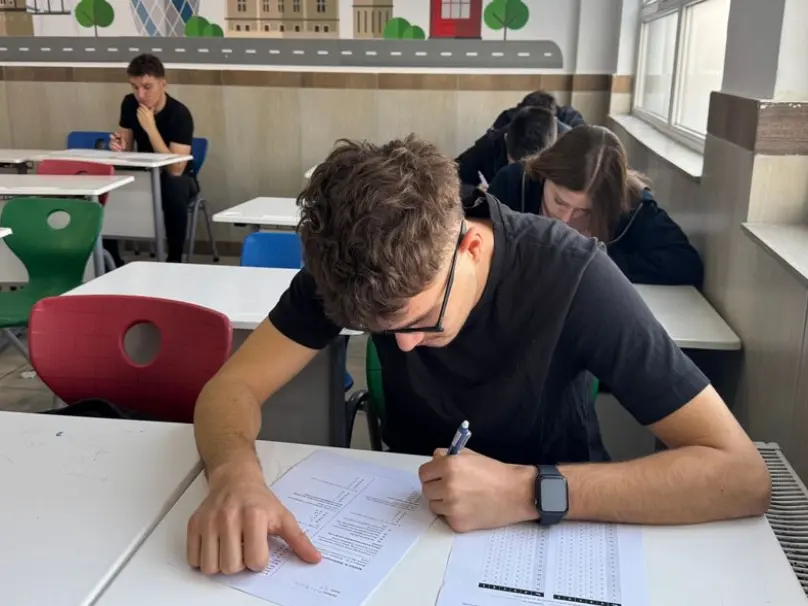
What the 11+ paper asks of a ten-year-old
Eleven-plus preparation is not one exam. Schools and consortia set their own papers or buy into GL Assessment or CEM question banks, and the mix changes: verbal reasoning, non-verbal reasoning, maths, English comprehension, sometimes a written task. A pupil can know the maths inside out and still lose marks because they spent four minutes on question three and never reached question twenty at the end of the section. Our job is to teach the paper as well as the subject. That means question types, timing, the habit of checking, and the small decisions that keep a test moving. Lessons are one-to-one, at home or online, with a qualified and DBS-checked tutor who works to a plan we agree with you before the first session.
Families often come to us in Year 4 or Year 5, though we also work with pupils in Year 6 when a school has a later assessment or a waiting list place opens. A typical pupil is bright but uneven: strong in mental arithmetic, slower on inference questions, or fluent in reading but rattled by non-verbal patterns. We start from what the assessment shows, not from a generic workbook.
Who this suits, and who it does not
This programme fits a pupil heading for a selective or independent school that sets an entrance paper, and who needs structure around the paper itself. Perhaps the school has sent sample papers and you want a second pair of eyes. Perhaps your child has the ability but freezes when a timer starts. Perhaps you are applying to two schools with different formats and want the differences explained without guesswork.
It does not suit a family looking for a two-week crash course before the exam. Technique needs time to settle, and a pupil who is still guessing at long multiplication or avoiding whole-class reading needs a different starting point. If the initial assessment shows gaps in core number work or basic comprehension, we will tell you. Sometimes the right move is to spend a term on foundations and come back to entrance papers later. We would rather say that at the start than take a booking that cannot do what you hope.
It also does not suit a pupil who cannot commit to short, regular practice between lessons. We keep homework small, usually fifteen to twenty minutes, four times a week, but the repetition is what moves a score.
How it works, from first call to exam day
1. An initial assessment
We begin with an assessment in maths, English and reasoning, plus a short conversation with you about the schools, the dates and any extra time or access arrangements already agreed with the school. The assessment takes place at home or online and gives us a baseline: which question types are secure, which are shaky, which cause a blank stare.
2. A personal learning plan
Before lessons begin, you receive a written plan. It sets out the topics, the paper skills and the order we will teach them, with a realistic number of sessions before the exam. Our lead tutor reviews every plan, which keeps the teaching consistent if your child sees more than one tutor across the term. The point is simple: you know what is happening and why.
3. Weekly one-to-one lessons
Each lesson has a narrow focus. A session might cover inference questions in a comprehension paper, then timed non-verbal sequences, then a two-minute check of the errors. We mix paper practice with teaching, so a wrong answer becomes a short explanation and a similar question, not a red cross and a shrug. Lessons happen at home or online, whichever suits the week.
4. Timed practice and mock papers
Once the basics are secure, we introduce full sections under exam conditions. The tutor keeps time, does not prompt, and marks afterwards. We review the paper together: where time went, which questions were skipped, whether checking changed anything. Practice under real conditions reduces the chance that the first proper timed paper is the one that counts.
5. Progress reports and a final review
You receive progress reports for parents at regular points in the programme. They show what has been covered, what is now secure, what still needs work, and what to practise before the next report. In the last few weeks we shift to short, sharp revision and exam-day routines: what to take, how to use the first two minutes, what to do if a question is impossible.
What to prepare before the first lesson
You do not need a folder of workbooks. Bring the school's sample papers and any past papers you have been given, the exam dates and any letters about access arrangements. A quiet space, a pencil, a ruler and paper are enough for a home lesson. For online lessons, a laptop or tablet with a steady connection and a webcam works; a headset helps but is not essential. Have a glass of water nearby. Small things.
If your child has sat a mock or a practice paper at school, send us the marked script. It is often more useful than a fresh test because it shows how they behave under pressure.
What affects the timing and the fee
No two preparations run for the same number of weeks. The main variables are the exam date, the number of schools and paper formats, the gap between the assessment and the standard expected, and how much reasoning practice is needed. A pupil applying to one school with a GL-style paper follows a tighter plan than a pupil sitting three different papers across two counties. Frequency matters too: one lesson a week with steady home practice is common, but some families choose two lessons a week for a shorter, more intensive run.
We do not publish a price list, because a plan written before an assessment would be guesswork. Fees are quoted on request, once we know the shape of the programme, and they are confirmed in writing before lessons begin. Travel is a factor for home lessons in and around Glasgow, from Shawlands to Milngavie, and online lessons remove it; we will explain the difference when we quote.
Our tutors are qualified and DBS-checked. We work with pupils aged 7 to 18 across the business, but 11+ preparation usually sits in Years 4 to 6.
Questions parents ask
How early should we start?
Autumn of Year 5 is the common start for a Year 6 exam, which gives three terms to build technique without panic. Starting in Year 4 is fine if the school is highly competitive or your child needs longer on reasoning. Starting in the summer before Year 6 is tight but workable if the foundations are in place.
Can you help if my child freezes under timed conditions?
Yes, that is a large part of the work. We practise short timed sections first, then build to full papers. The tutor teaches a simple routine for the first minute of a paper: scan the section, note the marks, decide a question to leave. Confidence comes from repetition, not from a pep talk on the morning.
Do you use real past papers?
We use school sample papers where they exist, published GL and CEM-style practice, and our own question sets. We use sample papers and published practice, not live papers. The value is in the marking and the conversation after the paper, not in the paper itself.
Is online as good as home tuition for 11+?
For reasoning and English, online works well. The tutor can share a paper on screen, annotate it and watch how your child works through a question. For pupils who need a firm hand on timing and a room without distractions, home lessons can be easier. We will recommend one or the other after the assessment, and you can switch if circumstances change.
What if we are applying to more than one school?
Bring the papers and dates. We map the differences: some schools weight reasoning heavily, some set a longer English paper, some use a group task. The plan covers the shared skills first, then the school-specific formats in the final weeks.
From first steps to exam-ready
-
Question types
Learning each reasoning question type and the short method that solves it.
-
Timed practice
Short papers against the clock, then a review of every wrong answer.
-
Full mocks
Complete papers in exam conditions, with a written breakdown for parents.
Lesson details
- ✓
Marked mocks
Every mock is marked and returned with a question-by-question note.
- ✓
Timing drills
Short bursts of timed questions, so pace becomes normal rather than stressful.
- ✓
Parent briefing
A short call after each mock to explain the score and the next step.